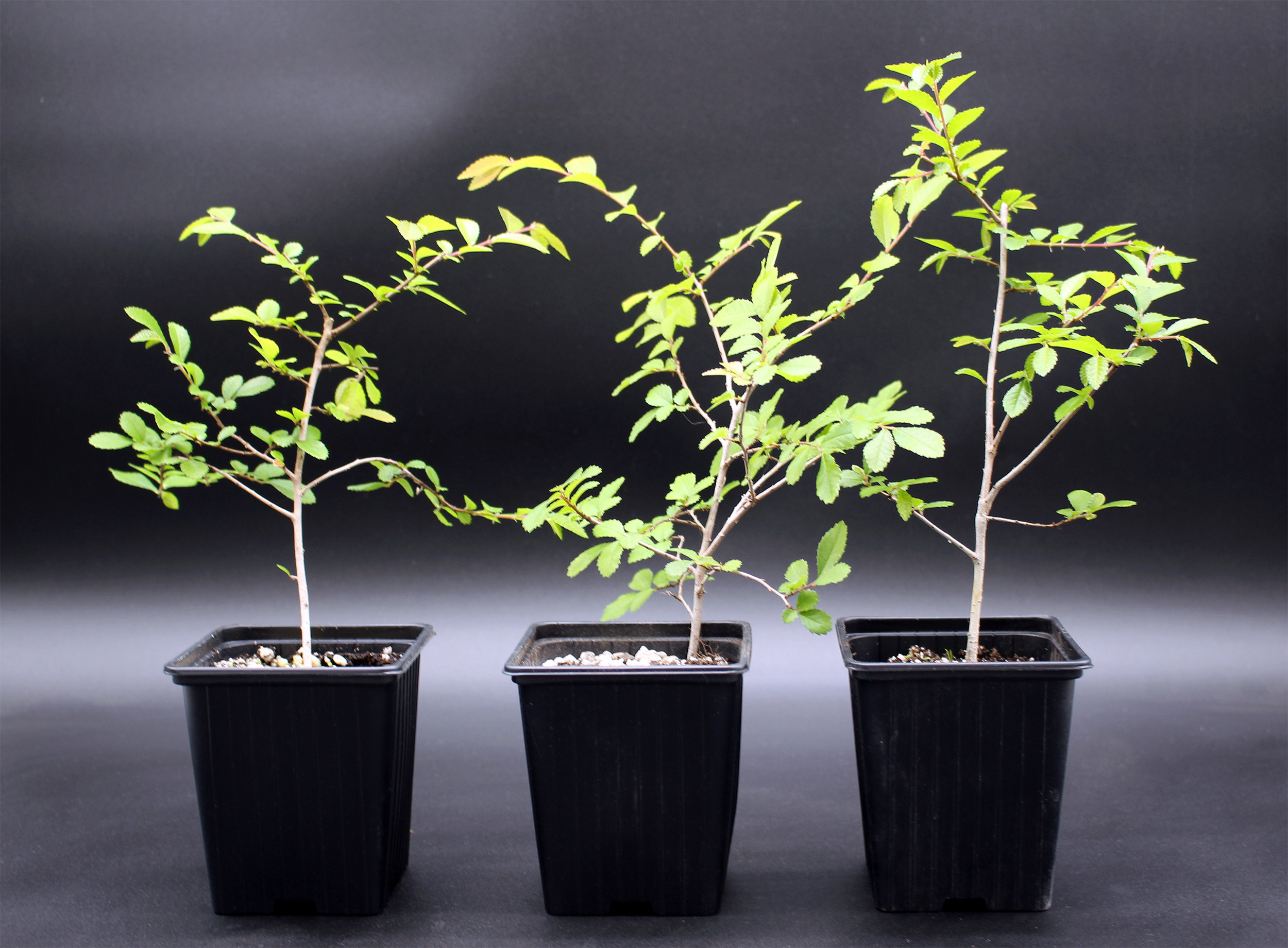
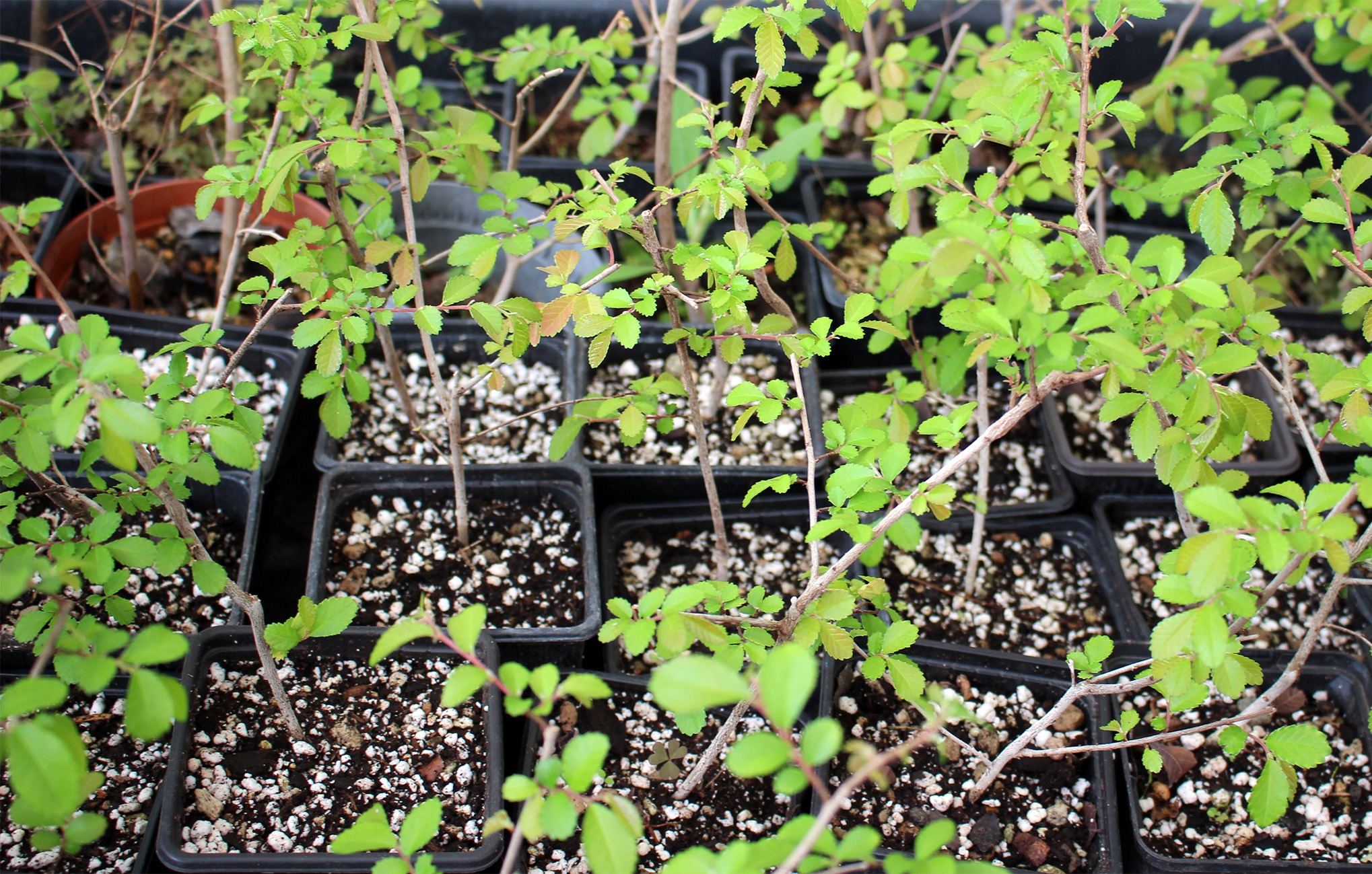
Description
Ulmus parvifolia, commonly known as Chinese elm, is a deciduous to semi-evergreen tree valued for its durability, graceful form, and exceptional adaptability. Native to China, Korea, Japan, and Vietnam, it has become one of the most widely planted elm species in temperate regions around the world. Its popularity comes from a combination of ornamental beauty, disease resistance, and versatility in both landscape planting and bonsai cultivation.
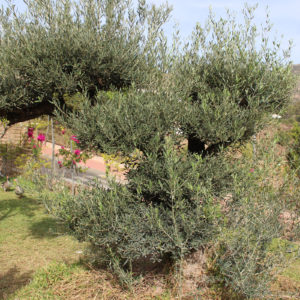
In its natural form, Ulmus parvifolia can reach heights of 20 meters, developing a rounded to spreading canopy supported by a sturdy trunk. Mature specimens often display elegant arching branches that create a soft, refined silhouette. One of its most distinctive features is its bark. As the tree ages, the bark exfoliates in small patches, revealing a mosaic of gray, green, orange, and brown tones beneath. This peeling pattern gives the trunk a textured, mottled appearance that adds strong visual interest throughout the year, particularly in winter when the branches are bare.
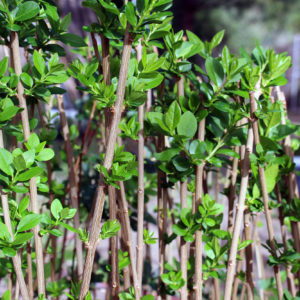
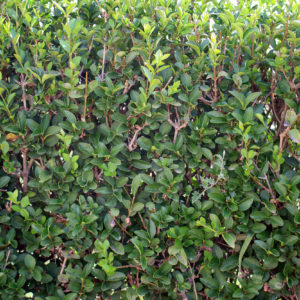
The leaves are small, typically 2 – 4 cm long, oval in shape with finely serrated edges. They emerge a fresh green in spring, deepen to a rich medium green through summer, and turn shades of yellow, orange, or muted red in autumn before dropping. In warmer climates, the tree may retain part of its foliage through winter, behaving as semi-evergreen. The small leaf size and fine twigging contribute to its delicate appearance despite the tree’s overall toughness.
Ulmus parvifolia produces small, inconspicuous flowers in late summer to early autumn, followed by winged seeds known as samaras. Unlike many other elm species that flower in early spring, the Chinese elm blooms later in the season. The seeds mature quickly and are often dispersed by wind.
One of the most important characteristics of Ulmus parvifolia is its resistance to Dutch elm disease, a fungal infection that devastated elm populations across Europe and North America in the twentieth century. While not completely immune, it is far more resistant than American or English elms. This resilience has made it a valuable replacement tree in urban environments where traditional elms once dominated streetscapes.
The species is highly adaptable to different soil types, including sandy, loamy, and even moderately poor soils, as long as drainage is adequate. It tolerates heat, drought, wind, and urban pollution remarkably well. This makes it an excellent choice for city planting, parking lot islands, parks, and residential yards. Once established, it requires relatively little maintenance beyond occasional pruning to shape the canopy and remove dead or crossing branches.
In addition to its landscape use, Ulmus parvifolia is one of the most respected species in bonsai cultivation. Its naturally small leaves, fine branching, and responsive growth allow it to be shaped into convincing miniature trees. The exfoliating bark enhances the illusion of age, even in younger specimens. It responds well to pruning and wiring, and it can develop strong trunk taper and ramification over time.
Chinese elm combines elegance with strength. It offers year-round interest through textured bark, refined branching, and seasonal foliage changes. Whether planted as a street tree, grown in a garden, or trained as a bonsai, Ulmus parvifolia stands out as a resilient and visually engaging species that bridges the gap between ornamental beauty and practical performance.
The plant is delivered with few or no leaves during the colder months.
Scientific name: Ulmus Parvifolia
Common name: Chinese Elm
Origin: China, Korea, Japan, and Vietnam
Height of growth: Up 20 meters
Hardy: Yes
Heat sensitive: No
Sensitive to wind: Yes
Suitable as a bonsai: Yes
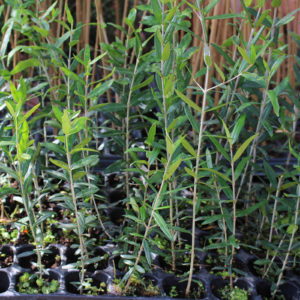
Delivery form: Pot 9×9 cm
Plant height: 10-30 cm
Additional information
| Weight | N/A |
|---|---|
| Size | 10-20cm, 20-30cm |
Related products
-
 Select options This product has multiple variants. The options may be chosen on the product page
Japanese black pine, Pinus thunbergii
€ 19,90 – € 29,90 -
 Select options This product has multiple variants. The options may be chosen on the product page
Buxus sempervirens (Boxwood)
€ 2,49 – € 4,90